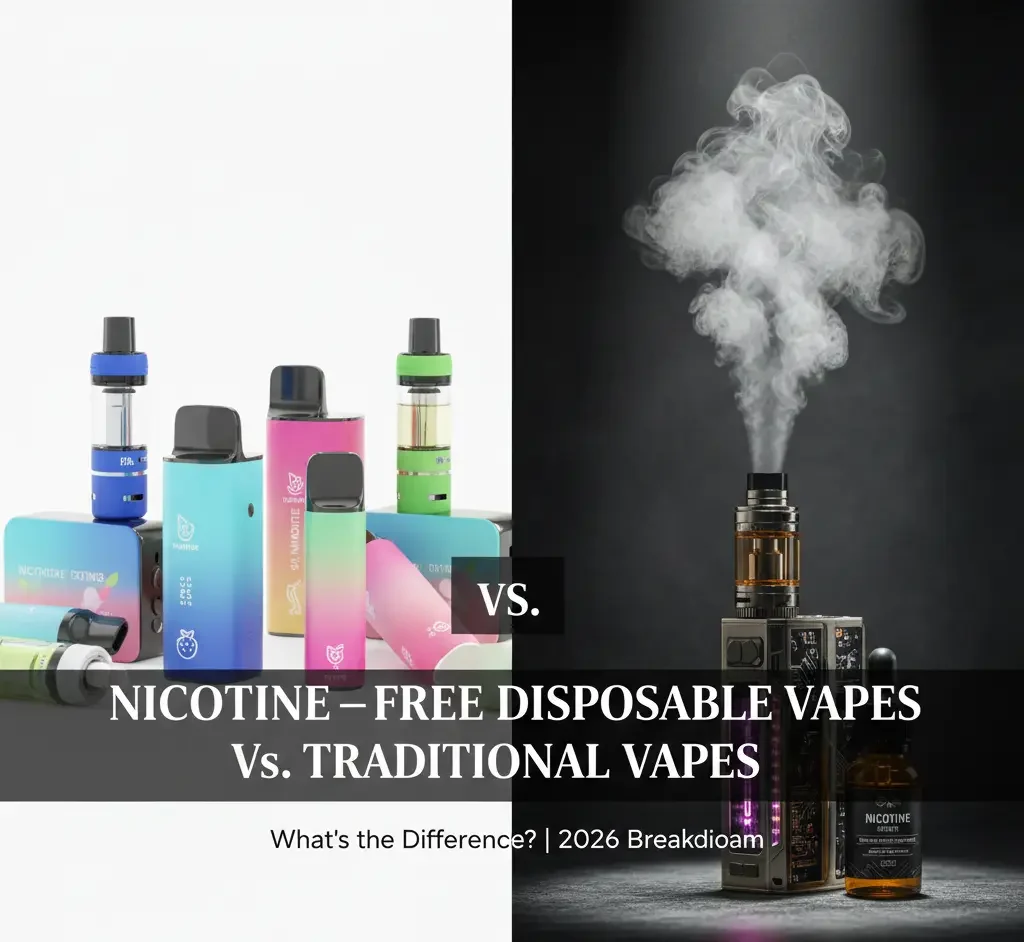
Nicotine-Free Disposable Vapes vs. Traditional Vapes: What’s the Difference?
In the rapidly evolving world of 2026, the vaping landscape has split into two distinct paths. On one side, we have the rising popularity of nicotine-free disposable vapes, often marketed to “flavor chasers” and those looking to break the cycle of addiction. On the other, we have traditional vapes, which range from refillable pod systems to high-powered mods that typically utilize nicotine.
While they may look similar at a glance, the internal mechanics, chemical composition, and user intent differ significantly. If you are trying to decide which path is right for you, understanding these core differences is essential.
1. The Core Ingredient: Nicotine vs. Zero-Nicotine
The most obvious difference lies in the e-liquid. Traditional vapes are primarily designed to deliver nicotine, an addictive stimulant. Users can choose various strengths, usually ranging from 3mg to 50mg (nicotine salts), to satisfy cravings or facilitate a transition away from combustible cigarettes.
Nicotine-free disposables, conversely, contain 0mg of nicotine. They utilize a base of Propylene Glycol (PG) and Vegetable Glycerin (VG) combined with food-grade flavorings. For many, these devices serve as a “placebo” for the hand-to-mouth habit without the chemical dependency.
The “Throat Hit” Factor
Nicotine provides a specific sensation known as the “throat hit” a slight tingling or burning feeling in the back of the throat.
- Traditional Vapes: Offer a customizable throat hit based on nicotine strength.
- Nicotine-Free Vapes: Are much smoother. While some users prefer this, former smokers may find the lack of a throat hit “underwhelming” or less satisfying.
2. Hardware and Longevity: Disposable vs. Refillable
The physical device itself represents a major fork in the road for consumers.
Nicotine-Free Disposables
These are “closed-system” devices. They come pre-charged and pre-filled. Once the e-liquid is depleted or the battery dies, the entire unit is discarded.
- Pros: Ultimate convenience, no maintenance, charging, or refilling required.
- Cons: High environmental impact (electronic waste) and higher long-term costs for daily users.
Traditional Vapes (Refillable Kits)
Traditional vaping usually involves a “reusable” device. This includes a rechargeable battery and a tank or pod that the user refills manually.
- Pros: Highly customizable. You can change the coil, adjust the airflow, and switch between thousands of different e-liquid brands and nicotine levels.
- Cons: Requires a learning curve. Users must clean the tanks, replace coils regularly, and ensure the device is charged.
3. Health Considerations: Are Nicotine-Free Vapes “Safe”?
A common misconception in 2026 is that removing nicotine makes a vape completely harmless. While removing nicotine eliminates the risk of addiction and the cardiovascular strain associated with stimulants (like increased heart rate and blood pressure), it does not mean the vapor is “just water vapor.”
Important Note: Research from institutions like Johns Hopkins and the CDC has shown that heating PG, VG, and flavorings can still create harmful byproducts like formaldehyde and acrolein. Furthermore, some disposable devices have been found to leach heavy metals (nickel, lead, and tin) from their heating coils into the vapor.
While generally considered “less harmful” than traditional tobacco, neither option is risk-free. Nicotine-free vapes are primarily a tool for harm reduction rather than a product that is “healthy” in the traditional sense.
4. Cost Analysis: Short-Term vs. Long-Term
For the budget-conscious consumer, the math changes depending on how often you vape.
| Feature | Nicotine-Free Disposable | Traditional Refillable Vape |
| Upfront Cost | Low ($5 – $15) | Moderate ($30 – $80) |
| Long-Term Cost | High (Cost adds up quickly) | Low (Refills are inexpensive) |
| Maintenance | None | Coils and e-liquid purchases |
If you are an occasional social vaper, a disposable is more economical. However, for daily use, a traditional refillable system is significantly cheaper over a one-year period.
5. User Intent: Why Choose One Over the Other?
The choice often comes down to why you are vaping.
- The Quitter: Someone looking to quit smoking often starts with a traditional nicotine vape to manage withdrawal, gradually stepping down their nicotine levels until they reach 0mg.
- The Social Vaper: Someone who enjoys the clouds and flavors at a party but has no interest in addiction will opt for the nicotine-free disposable.
- The Trick Performer: “Cloud-chasers” who practice smoke tricks often prefer nicotine-free e-liquids because they can inhale large volumes of vapor repeatedly without getting “nic-sick” (nausea from too much nicotine).
Conclusion
The difference between nicotine-free disposable vapes and traditional vapes isn’t just about the chemicals, it’s about the lifestyle. Disposables offer a frictionless, non-addictive experience for casual users, while traditional vapes offer the control and nicotine delivery necessary for those managing a transition from smoking.
Regardless of your choice, always source your devices from reputable, authorized retailers to ensure you aren’t inhaling black-market chemicals or using faulty hardware.
2 replies on “Nicotine-Free Disposable Vapes vs. Traditional Vapes: What’s the Difference?”
Enjoy every single day
Every day is a new beginning